ISEAT 2025: How EASE 5’s hybrid CPU/GPU architecture is redefining acoustic simulation workflows with instant, high-resolution feedback

At the recent 10th International Symposium on Electro Acoustic Technologies (ISEAT) in Shenzhen, China, AFMG’s managing director Dr. Stefan Feistel delivered a technical keynote that strikes at the core of the modern acoustic consultant's workflow. Titled "Interactive Sound System Design using Real-time Acoustic Simulation," the presentation offered a deep dive into the Acousteer engine of EASE 5 Third Edition, and how it fundamentally alters the design-calculate-analyze loop.
For our technical user base, it is crucial to understand exactly where this engine sits in the simulation hierarchy. Stefan Feistel’s presentation demonstrated how Acousteer targets the critical first 90% of system design using direct SPL mapping, sound system metrics, and statistical room acoustics, rendering results with near-zero latency.
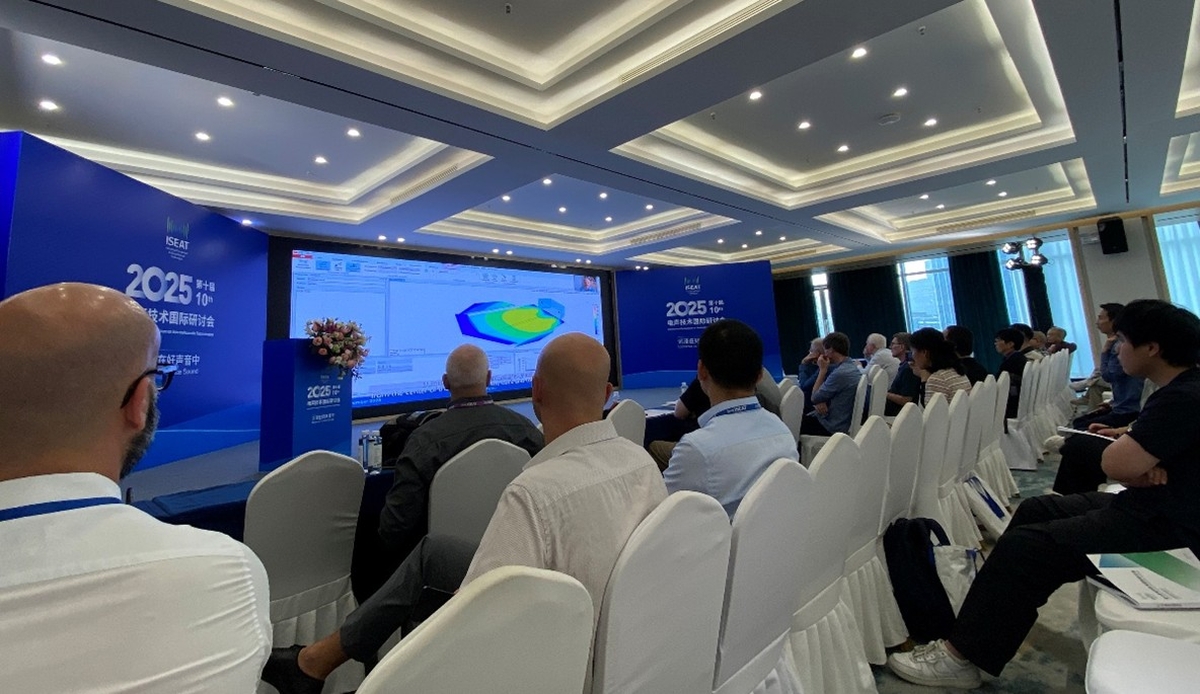
Precision without the wait
The presentation explains how by utilizing a highly optimized hybrid CPU/GPU simulation engine, the software calculates direct SPL and various other acoustic quantities instantaneously. The engine supports full bandwidth analysis (20 Hz to 20 kHz) with a frequency resolution of 1/24th octaves, ensuring high accuracy even for low-frequency interactions.
Key technical achievements include:
- Immediate feedback: Moving a loudspeaker, aiming a line array, or changing DSP settings results in an immediate visual update of the coverage map.
- Data optimization: The software architecture caches unchanged data (like room geometry) and only re-calculates the specific parameters altered by the user, maximizing efficiency.
- Hardware efficiency: The system is designed to run on contemporary standard PCs, utilizing the parallel processing power of modern GPUs.
Performance validation
The research validates the new engine using three example projects: a theatre hall, a music hall, and a large sports arena.
In performance comparisons against legacy algorithms, the new engine demonstrated a speed improvement factor of approximately 30x.
- Response time: For typical projects, calculation times dropped to between 0.1 and 0.5 seconds, providing a feeling of immediateness and facilitating interactivity.
- Scalability: Even for the largest project (the sports arena with over 150 sound sources), the system maintained "Ideal" response times on modern hardware.
Implications for the industry
The shift to real-time processing offers more than just saved time; it fundamentally transforms the design paradigm by enabling consultants to instantly visualize the cause-and-effect relationship between speaker placement and room coverage, thereby fostering a deeper, intuitive understanding of acoustic behaviour.
This immediacy eliminates the traditional time penalty associated with testing new ideas, encouraging a more creative and rigorous optimization process where different approaches can be tested on the fly. This capability unlocks new possibilities for live collaboration, empowering consultants to explore what if scenarios together or to directly demonstrate different solutions to clients without the disruption of calculation delays.
Watch the presentation
Watch the Acousteer engine's performance benchmarks and the technical breakdown of the hybrid architecture in Dr. Feistel's full presentation below.
The ISEAT presentation was accompanied by a reviewed conference paper authored by Stefan Feistel, Wolfgang Ahnert, and Johnson Chow in both Chinese and English language. It is following in the steps of the peer-reviewed paper Complex acoustics simulations in real time by Stefan Feistel and Wolfgang Ahnert, published in volume 58, issue 1 of the Proceedings of Meetings on Acoustics journal earlier this year. We recommend these two publications for a more in-depth look into the research around the Acousteer engine.
Take a test drive, try EASE 5’s Acousteer real-time engine with our free trial.


